Why Curls Get Drier After 40 — Even When Nothing About Your Routine Changed.
Two things shift quietly in midlife: your hair produces less of its own oil, and every wash takes more than it gives. Most women fix the first with products — and never check the second.
Short on time? Skip to the fix for dry curls ↓
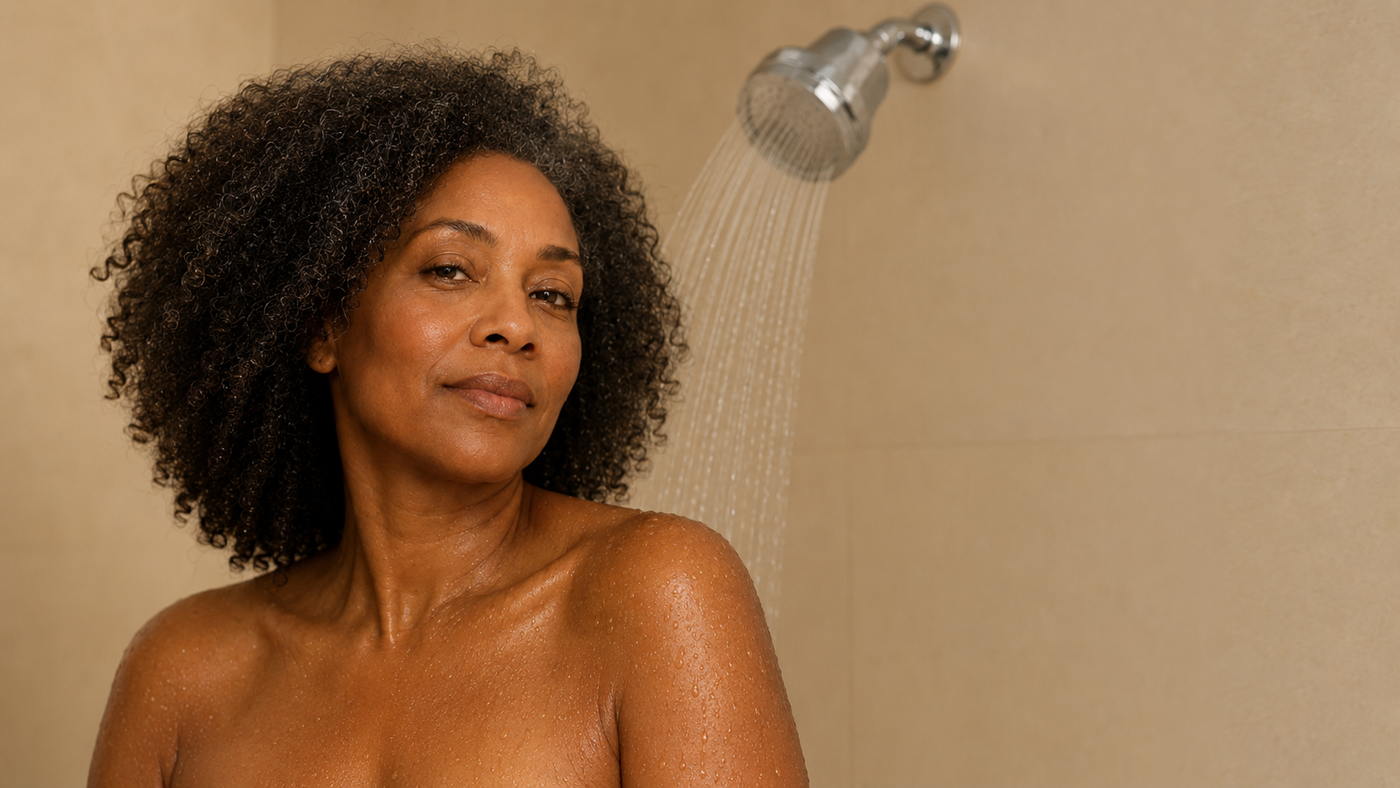
It usually starts as a quiet suspicion. The same deep conditioner that carried you through your thirties suddenly isn’t enough. Twist-outs that used to last a week feel parched by day three. You buy a richer cream, add an oil, stretch wash day a little further apart — and your curls still drink it all and ask for more.
The instinct is to blame the products, or your technique, or your age. The truth is simpler, and almost nobody talks about it: two things changed, and only one of them is your hair.

Shift one: your hair makes less of its own moisture.
Your scalp produces a natural oil called sebum — your hair’s built-in conditioner. Production peaks in your twenties and declines gradually with age, which means strands in your forties and fifties simply receive less of the oil that once kept them supple. Textured hair feels this first and hardest: the tighter the curl, the harder it already is for oil to travel down the strand. And graying strands compound it — as pigment fades, hair’s structure changes and typically holds less moisture than before.
This part, most women already manage. It’s why your shelf has gotten richer over the years: heavier creams, butters, sealing oils. Sensible — but it only addresses half the equation.
End the dryness — see the fix →Shift two: every wash takes more than it gives.
While your hair’s own moisture supply declines, the thing it meets most often — your shower water — keeps making withdrawals. Unfiltered tap water commonly carries three things your curls would rather skip:
Chlorine, added to keep municipal water safe, which strips natural oils from hair and skin — the same reason pool water leaves you feeling squeaky and parched. Hard-water minerals like calcium and magnesium, which build up on strands over time, leaving hair dull, stiff, and harder for your products to penetrate. And sediment and trace metals picked up on the way to your showerhead.

None of this mattered as much in your twenties, when your scalp’s oil production could outpace what the water took. After 40, the math flips.
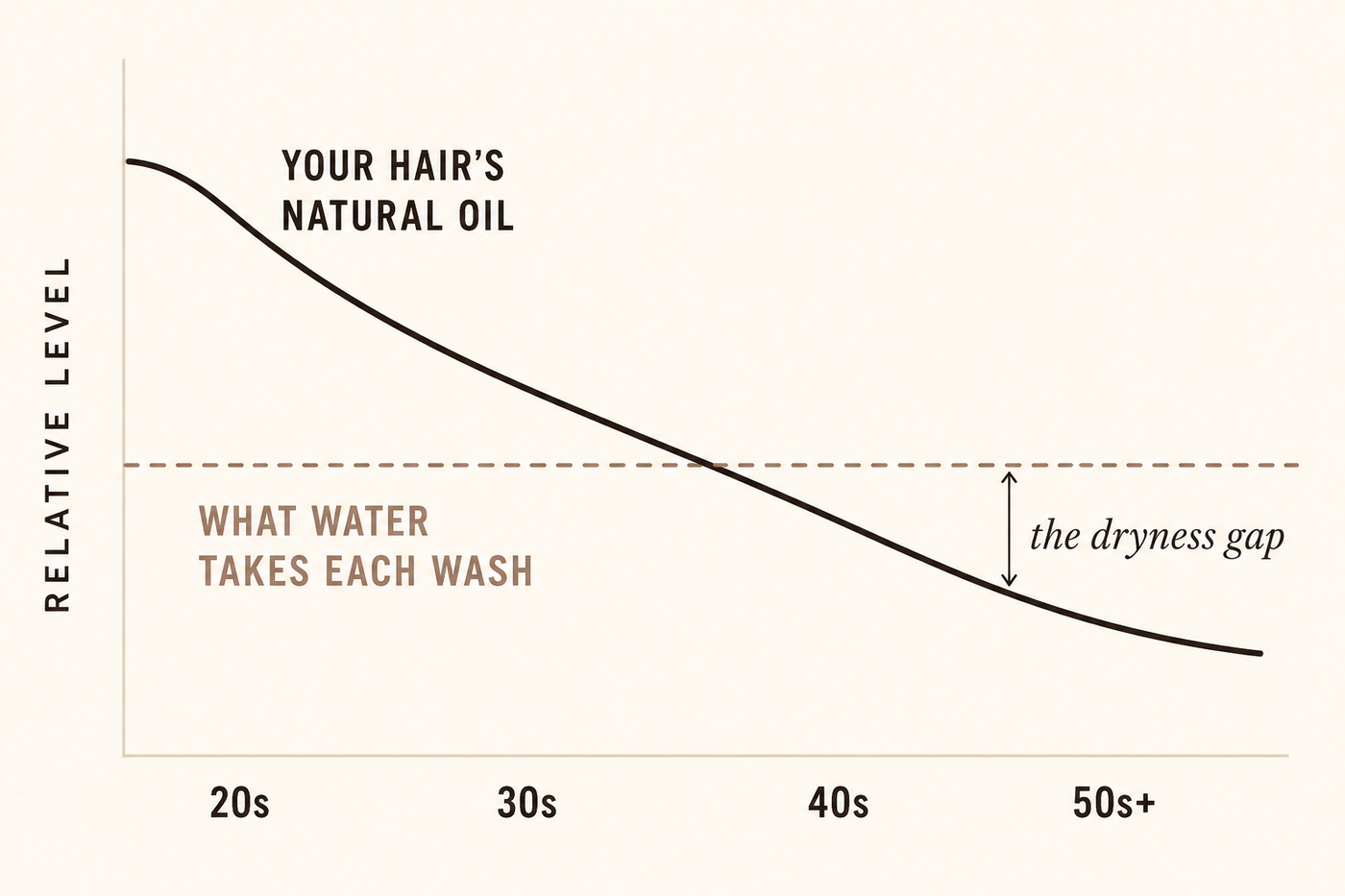

This is why the richer-products strategy eventually plateaus. Every product you apply sits on hair that was just stripped, coated, or both — by the very water you used to apply it. The product isn’t failing. It’s being asked to out-work the shower.
What actually helps: filter the water first.
A shower filter changes the input instead of patching the output. A good one reduces chlorine, trace metals, and sediment before the water touches your hair and skin — so your natural oils stay where they belong and your products land on cleaner strands.
Get the showerhead built for curls →One honest note, because it matters: a filter is not a water softener. If your water is very hard, only an ion-exchange softener removes hardness minerals at the source. What a quality shower filter does — reducing the chlorine, metals, and sediment that strip and coat textured hair — is the piece most wash days are missing, and the piece you can change in five minutes without a plumber.
What to look for if you have curls, coils, or locs
Most shower filters are built for everybody — which means they’re optimized for nobody in particular. If your hair is textured, look for: filtration that targets chlorine, heavy metals, and sediment; strong, even water pressure (thick and coily hair needs real rinsing power to clear product fully); and replaceable filters so performance doesn’t quietly fade.
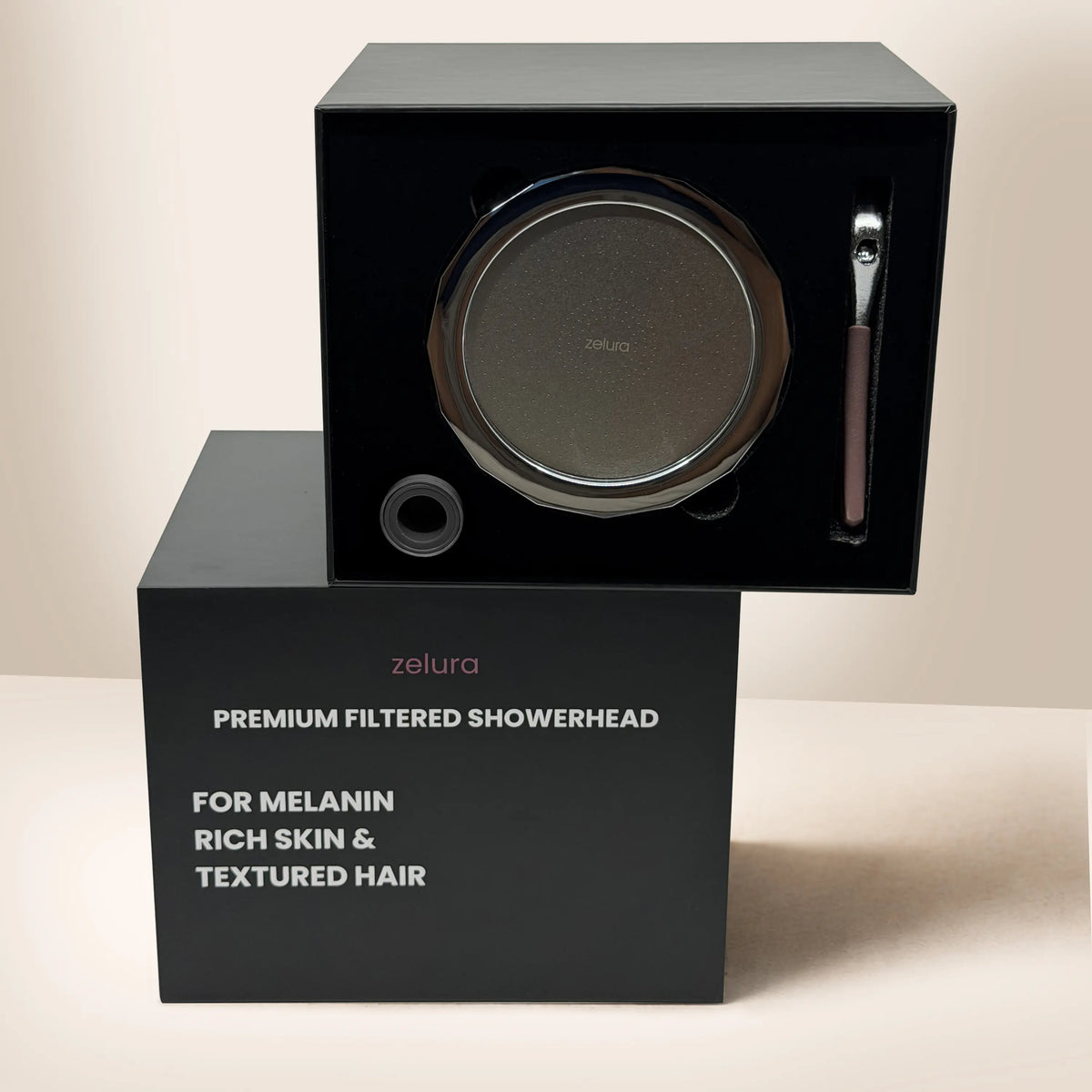
The Zelura Filtered Showerhead
The only filtered showerhead designed specifically for curls, coils, and melanin-rich skin — filtration for chlorine, heavy metals, and sediment, with the strong, even pressure thick textured hair needs to rinse clean.
- Designed for curly, coily & wavy textured hair and melanin-rich skin
- Filters chlorine, heavy metals & sediment before water touches your hair
- Strong rinse pressure — no leftover product or buildup
- Comes with a free $72 Ritual Kit: satin shower cap, exfoliating gloves, scalp massager & detangler brush
- 5-minute install, lifetime warranty, 90-day money-back guarantee
Your curls didn’t stop cooperating at 40. They’re responding, reasonably, to less oil and harsher water. Fix the water, and everything else you’re already doing finally gets to work.